

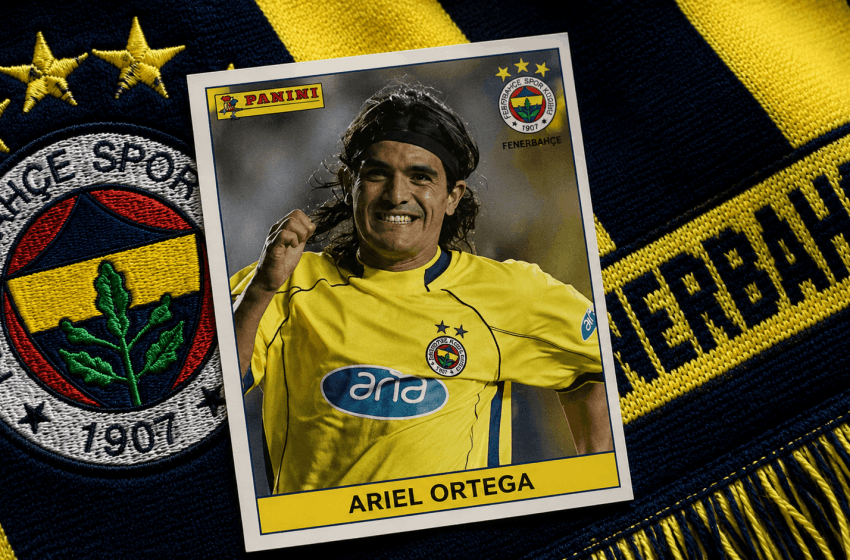
Ferrari Rides and ‘Coward Hens’: The Beautiful, Brief Chaos of Ariel Ortega
There is a specific brand of madness reserved for the arrival of a South American No. 10 at Atatürk Airport. It’s a mix of flare smoke, rhythmic chanting, and the collective delusion that one man with a low center of gravity can somehow fix a nation’s structural economic problems.
In the summer of 2002, Fenerbahçe landed the ultimate prize: Arnaldo Ariel Ortega.
To the rest of the world, he was “El Burrito”—the Little Donkey. To the Kadıköy faithful, he was the heir to Maradona, a man who didn’t just dribble past defenders but seemed to insult their ancestors with every shimmy. But as is often the case when you drop a mercurial Argentine poet into the pressure cooker of Turkish football, the result wasn’t a tidy highlights reel. It was a glorious, expensive, and deeply weird car crash.
The Solo Fantástico (And a 6-0 Drubbing)
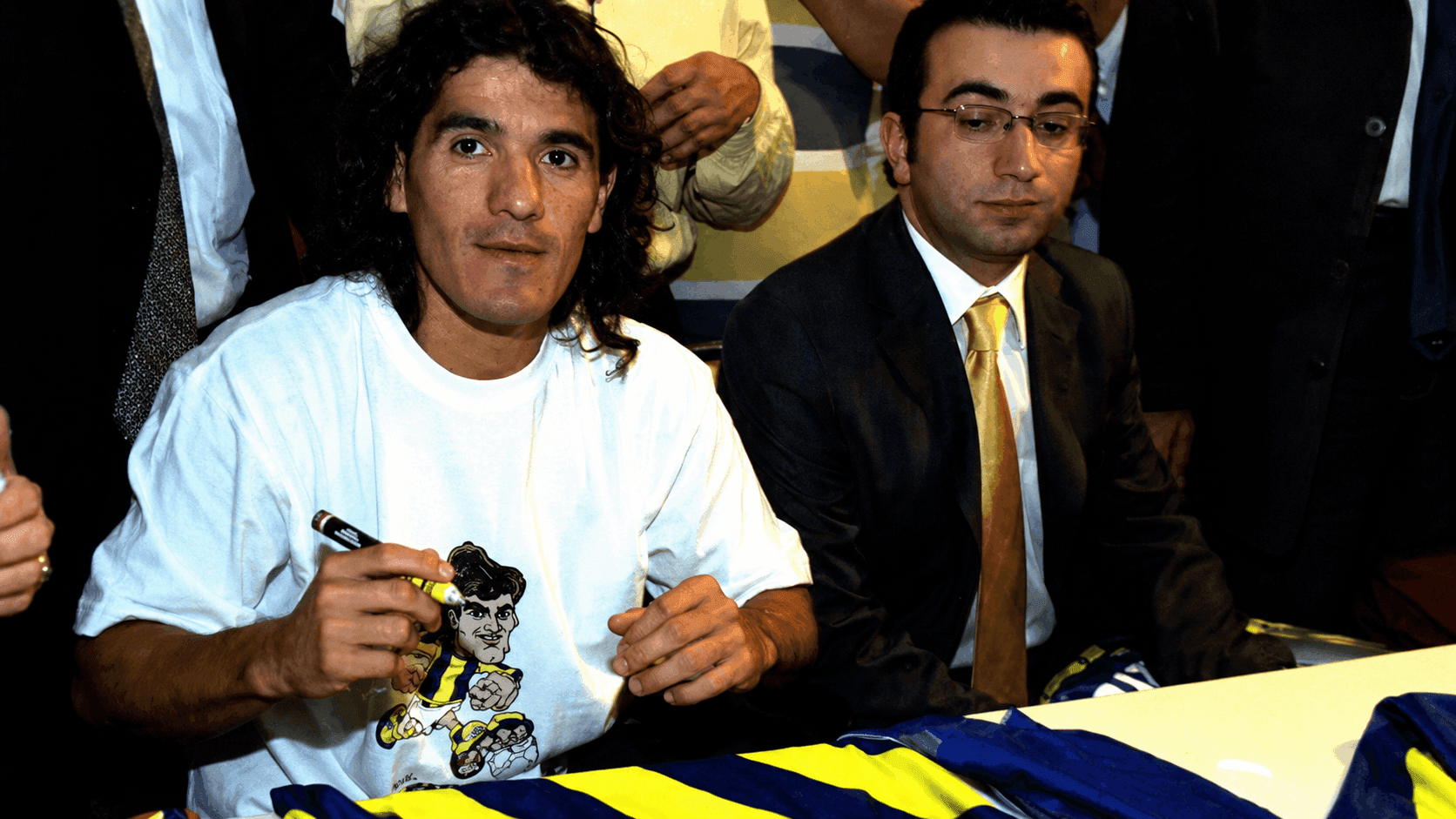
Ortega didn’t arrive in Istanbul to play football; he arrived to be a deity. Having snubbed Newcastle United (presumably because he preferred a nice Bosphorus breeze to a rainy night in Tyneside), he signed a four-year deal that felt like a statement of intent.
On the pitch, when he was “on,” it was pure football heritage. As Jorge Valdano once put it, Ortega defied the laws of mechanics. He protected the ball with a “malice that surpasses strength.” He was a master of the lobbed finish—the kind of shot that hangs in the air long enough for the keeper to reconsider his career choices before it hits the net.
The peak of the fever dream came during the legendary 6-0 demolition of Galatasaray. Ortega scored, the fans ascended to a different plane of existence, and for a brief moment, it looked like the $7.5 million fee was the bargain of the century.
But beneath the “Solo Fantástico” flair, the wheels were already coming off the Ferrari.
The Ferrari and the Minibus
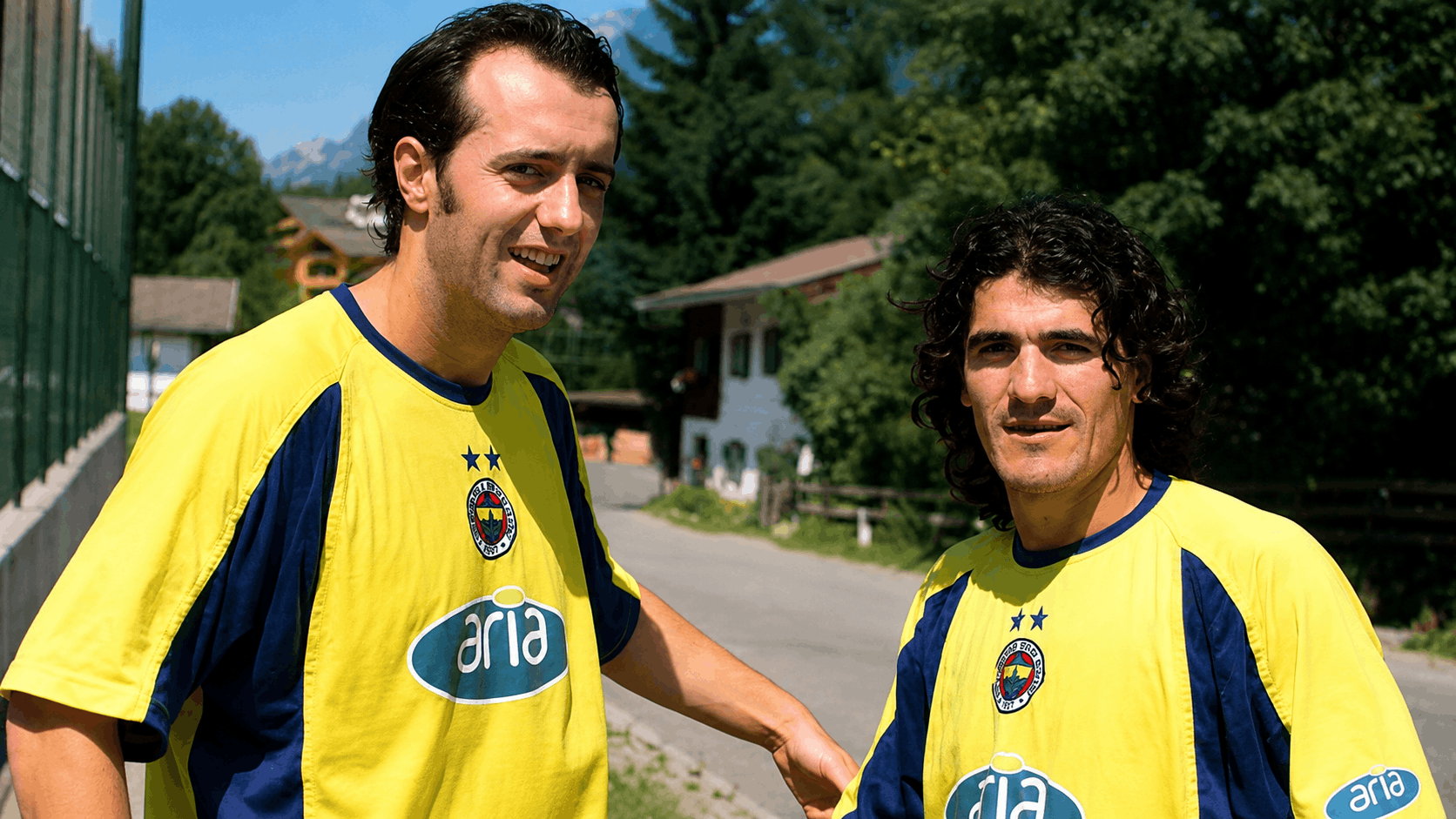
If you want to understand the man behind the myth, you have to look at his relationship with Samet Güzel, the club’s legendary translator. While the Turkish media was busy dissecting Ortega’s tactical discipline (or lack thereof), Samet was seeing a guy who lived in his own quirky universe.
In a scene that feels like it was ripped from a Guy Ritchie film, Samet—then a young lad on a meager wage—was trudging to the minibus stop to get to the Samandıra training ground. Suddenly, a Ferrari screeches to a halt. It’s Ortega.
“What are you doing here?” the Argentine asked, looking at the bus stop like it was a crime scene.
“Waiting for the minibus, Ariel.”
“You work for Fenerbahçe. This cannot happen.”
For the next month, one of the most famous footballers on the planet acted as Samet’s personal Uber driver. No cameras, no PR, no “look at my charity work” Instagram posts. Just a world-class playmaker picking up a translator in a supercar because he thought the bus was beneath his mate’s dignity.
The “Coward Hen” Incident
Of course, it wouldn’t be Turkish football without a healthy dose of elite-level shithousery. While Fener fans were busy worshiping their new idol, Beşiktaş supporters were plotting a masterpiece of psychological warfare.
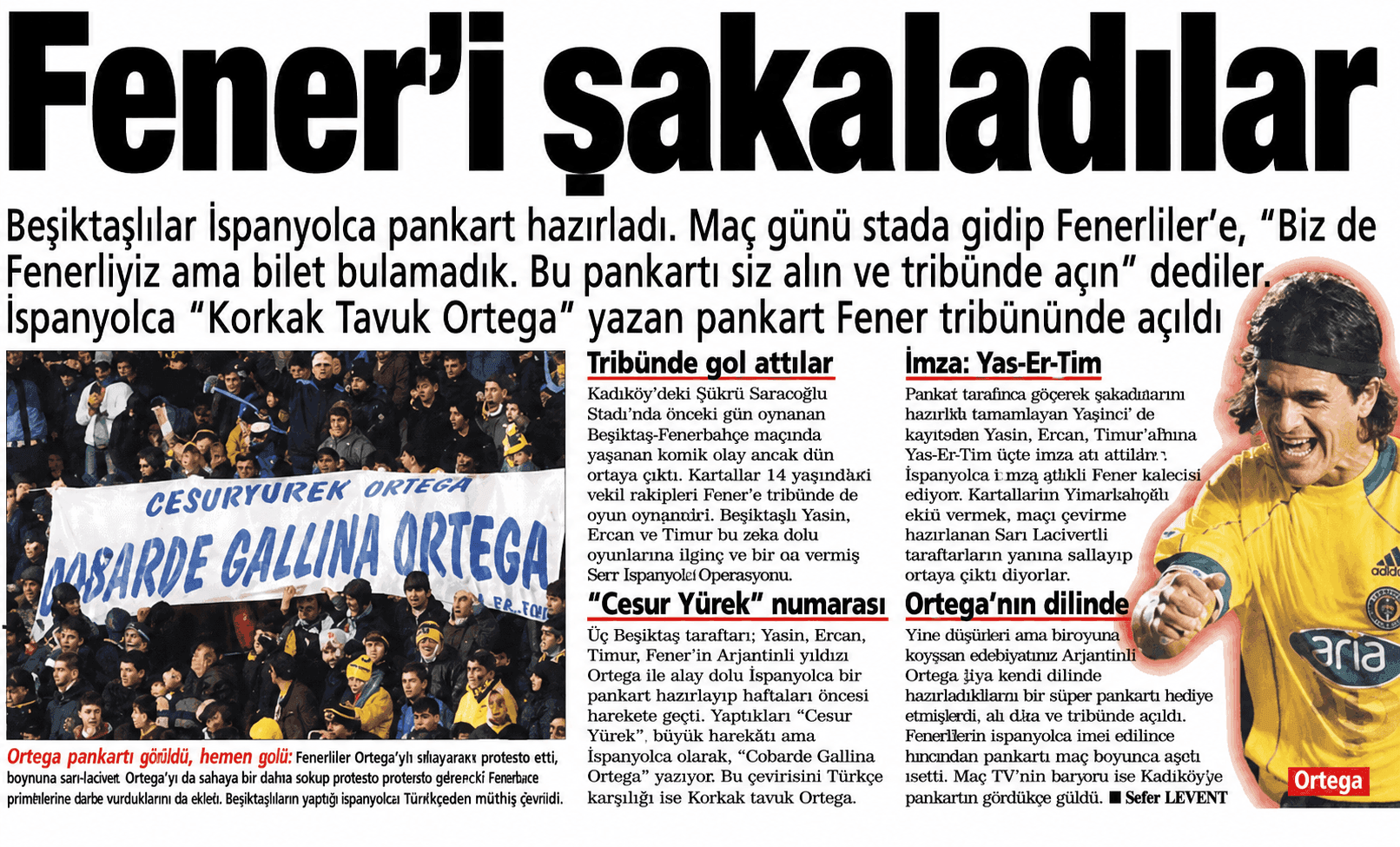
They managed to trick the Fenerbahçe faithful into unfurling a massive banner during a match. The Fener fans thought it was a message of support in Spanish. In reality, it called Ortega a “Gallina Cobarde” (Coward Hen)—a stinging reference to his River Plate roots (River are nicknamed Los Millonarios, but rivals call them Gallinas).
Imagine the scene: thousands of fans screaming their lungs out, holding up a banner that basically served as a massive “kick me” sign for their own star player. It was peak Sunday League chaos on a multi-million dollar stage.
The Great Escape: “Like Torture”
By February 2003, the honeymoon hadn’t just ended; the couple was throwing plates at each other. Ortega went away on international duty with Argentina and simply… never came back.
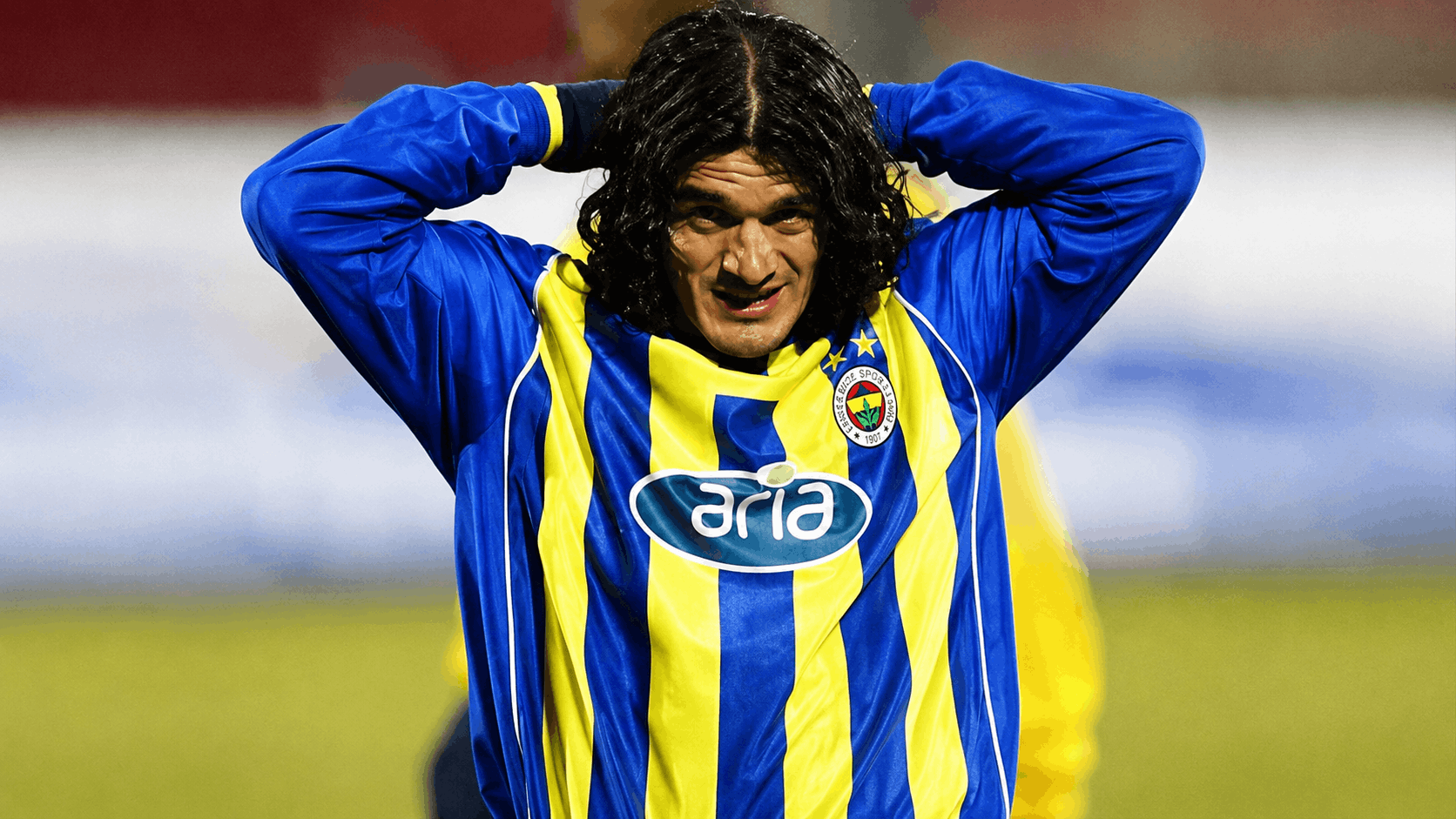
He claimed Istanbul was “like torture.” He cited homesickness, a dislike of the training methods, and the fact that he just couldn’t settle. While the club’s board was understandably fuming, anyone who has ever experienced the soul-crushing weight of a grey Istanbul winter while missing a decent Argentine steak could probably empathize.
The fallout was nuclear:
- A worldwide ban: FIFA sidelined him for nearly a year.
- The $11 million fine: A figure that would make even a modern Premier League owner wince.
- 19 months in the wilderness: He didn’t play again until Newell’s Old Boys bailed him out in late 2004.
Why We Still Care
Ortega’s Turkish stint lasted fewer than 20 games, yet he remains a permanent fixture of the league’s folklore. Why? Because Turkish football has no time for “efficient” players who give 7/10 performances and never miss a training session.
We want the guy who cries in the dressing room. We want the guy who drives the translator to work in a Ferrari. We want the flawed genius who treats the ball like a lover and the contract like a suggestion.
Ortega wasn’t a professional athlete in the modern, boring sense. He was a nomad who stopped by for a few months, broke the record for most smoke flares lit in his honor, humilated Galatasaray, and then left because he missed home. He was footballing chaos personified—and honestly, we wouldn’t have it any other way.