


Emre Asik, The Last Gladiator
There are defenders who tackle. Then there are defenders who arrive at your kneecaps like a tax audit from the state. Emre Aşık belonged firmly to the second category.
Modern football, with its inverted full-backs, progressive passing maps and centre-halves who complete 112 sideways passes a game before applauding themselves on LinkedIn, would probably struggle to understand him. Emre wasn’t built for “build-up play”. He was built for survival. A footballer forged somewhere between a Janissary barracks and a motorway service station wrestling match.
Watching him at his peak felt less like watching a defender and more like witnessing a man trying to physically evict strikers from Turkish territory. And Turkish football adored him for it.
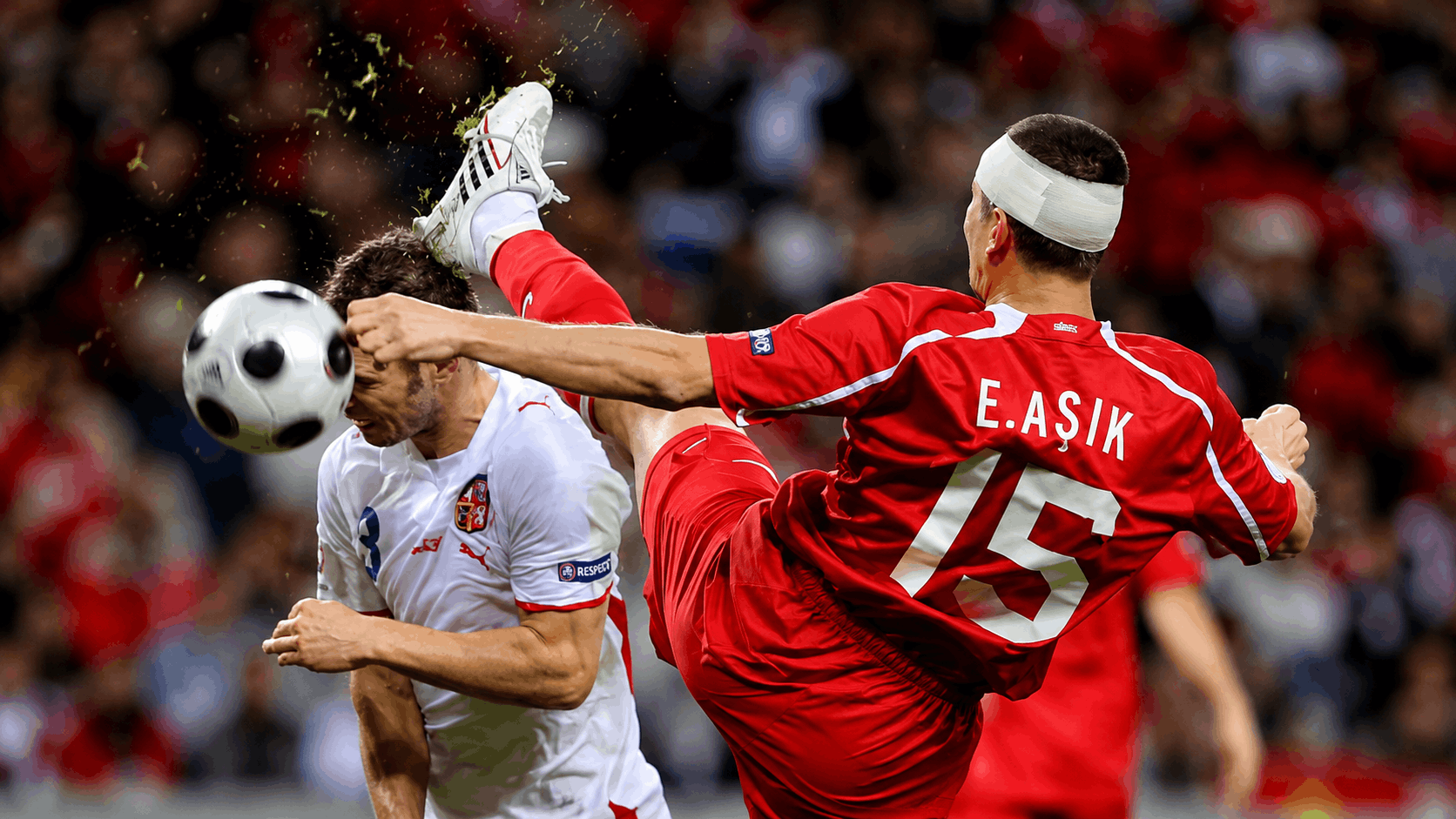
Because in an era when the Süper Lig still smelled faintly of cigarette smoke, winter mud and sunflower seeds thrown from concrete terraces, Emre Aşık represented something supporters instinctively respected: suffering. Real suffering. Bandaged-head suffering. Injection-before-kickoff suffering. Limping-through-120-minutes suffering.
He looked like the sort of footballer who’d head away a cross even if the stadium roof collapsed.
That wasn’t image management either. That was genuinely him.
The Human Crash Barrier
Turkish football has always had a strange romantic attachment to defenders who look mildly furious at all times. The elegant ones get appreciated. The cultured ones get praised. But the violent lunatics become folklore.
That’s why Turkish football still speaks about Bülent Korkmaz like he crossed Anatolia on horseback defending villages from crusaders. And that’s why Emre Aşık slotted perfectly into that lineage.
Together, Bülent and Emre formed what can only be described as a defensive partnership assembled by men who thought diplomacy was for cowards.

“Çifte Gladyatör” they called them. The Double Gladiators. And honestly, it fit.
One organised the line with grim authority. The other hunted movement like a nightclub bouncer spotting trouble before it started. Bülent was the commander. Emre was the attack dog. If one stepped out to flatten a striker, the other instantly sealed the gap behind him with almost military precision.
You can keep your high defensive lines and ball-playing centre-backs. Turkish football supporters of a certain age still prefer defenders who looked like they’d happily fight scaffolding.
Blood, Tape and Ali Sami Yen
Nothing captured Emre Aşık better than the image of him continuing matches with his head wrapped in bandages like a man escaping a 1970s war film.

Turkish football in the early 2000s loved these moments. Not because it glorified injury necessarily, but because pain tolerance became part of football mythology. Supporters wanted players who visibly sacrificed themselves. The more broken you looked while continuing, the more immortal you became.
Emre understood this instinctively.
The iconic example arrived during Galatasaray vs Beşiktaş (2001–02 Süper Lig). Galatasaray were heading toward another title. The atmosphere inside Ali Sami Yen was less football stadium and more controlled electrical storm. Somewhere amid the chaos, Emre took a blow to the head that left him bleeding.
Most modern defenders would disappear down the tunnel for concussion protocol and isotonic gels.
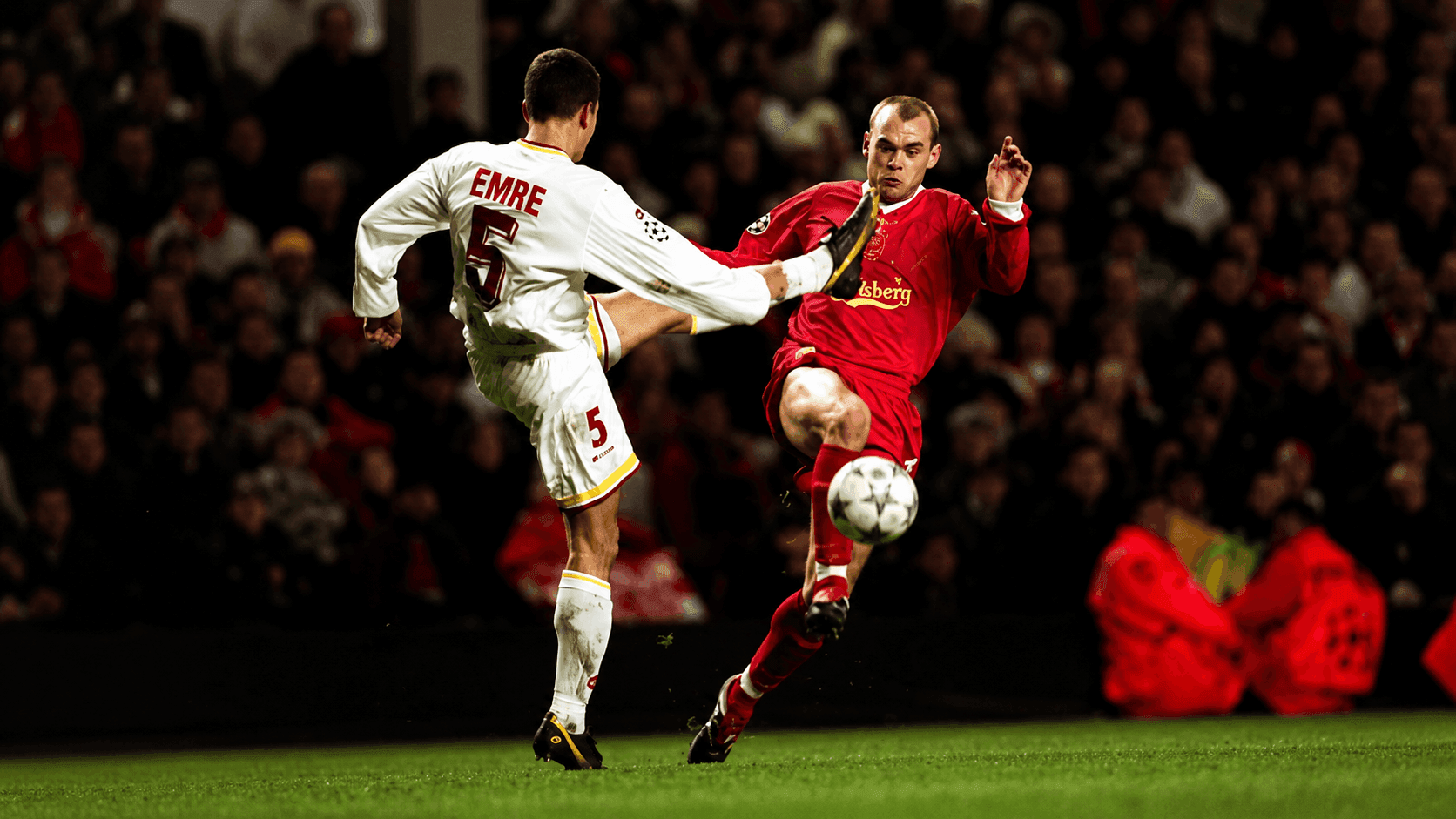
Emre basically got wrapped up like a kebab and carried on defending.
The image became instantly mythological. Blood. Bandage. Derby atmosphere. Endless clearances. Turkish football couldn’t have scripted itself more perfectly if it tried.
And the thing is: supporters believed him. They knew it wasn’t theatre.
He genuinely looked happier after collisions.
Stamford Bridge and the Turkish Art of Causing Problems
Turkish clubs in Europe during the early 2000s operated on pure chaos energy.
One week they’d lose to a team from somewhere near the Belarusian border. The next they’d terrorise a European giant under floodlights while commentators screamed themselves into respiratory failure.
Chelsea vs Beşiktaş (2003 UEFA Champions League) was exactly that sort of night.
Roman Abramovich’s shiny new Chelsea project was supposed to flatten everyone. Millionaires everywhere. International stars everywhere. English commentators speaking about “continental pedigree” every six seconds.

Then Beşiktaş turned up with Emre Aşık in defence and treated Stamford Bridge like a hostile construction site. The beauty of Turkish teams abroad back then was their complete emotional instability. They never entered matches respectfully. They entered them personally offended by the opposition’s existence.
Chelsea’s attackers discovered quickly that Emre wasn’t remotely interested in reputations. Fancy transfer fee? Irrelevant. Celebrity status? Meaningless. If anything, he seemed to enjoy smashing famous footballers slightly more.
Beşiktaş won 2-0. Clean sheet. Proper Turkish away-day terrorism.
The Night Turkey Refused To Die
Of all the matches associated with Emre Aşık, though, one towers above everything else.
Turkey vs Croatia (UEFA Euro 2008 quarter-final). Vienna. Pure madness.
If you weren’t emotionally damaged by Euro 2008 as a Turkish supporter, you probably weren’t paying attention.

The context alone sounds fictional. Suspensions everywhere. Injuries everywhere. Half-fit defenders patched together with injections and prayer. Servet Çetin unavailable. Volkan Demirel suspended. The squad looked less like a tournament team and more like survivors of a motorway pile-up.
So naturally, Turkey produced one of the greatest acts of footballing stubbornness ever witnessed.
Fatih Terim’s famous line : “Biz bitti demeden bitmez” (“It’s not over until we say it’s over”) became a kind of national fever dream during that tournament. But slogans only work if someone physically embodies them on the pitch. Emre Aşık embodied them completely. For 120 minutes he battled against Luka Modrić, Ivan Rakitić and Ivica Olić like a man defending the final bridge out of a collapsing city.
The Croatian forwards kept running. Emre kept appearing. Headers. Blocks. Sliding tackles. Emergency clearances. One-v-one duels that looked increasingly less legal as the game wore on.
And when Turkey eventually completed the impossible comeback, it somehow felt fitting that one of the tournament’s most emotionally chaotic teams had been anchored by a defender whose entire career revolved around refusing surrender.
The Anti-Modern Footballer
There’s something strangely comforting about players like Emre Aşık in hindsight.
Football now is cleaner. Smarter. Faster. More tactical. But occasionally it also feels emotionally sanitised.
Defenders apologise after fouls. Centre-backs speak like management consultants. Players collapse under light contact while defenders point at expected goals charts afterwards.
Emre came from a football culture where defenders were expected to look slightly traumatised by halftime.
And Turkish football loved that because Turkish football itself has always operated emotionally rather than rationally. It values resistance. Defiance. Stubbornness. Pride. Sometimes even glorious self-destruction.
That’s why supporters still remember him so vividly. He represented a disappearing football archetype: the defender as gladiator.
Just violence, sacrifice and 90 minutes of organised suffering. And honestly?
Turkish football has never quite replaced him.
Club Career
Emre Aşık’s club career spanned from 1992 to 2010, primarily spent in the Turkish Süper Lig. He is one of the rare players to have suited up for the country’s biggest rivals, Galatasaray, Fenerbahce and Beşiktaş.
- Early Years (1992–1996): Began his professional career at Sönmez Filamentspor and Balıkesirspor before earning a transfer to Fenerbahçe.
- İstanbulspor (1996–2000): Established himself as a prominent defender, logging 86 appearances and earning a national team call-up.
- Galatasaray (2000–2003): Won the Süper Lig title (2001–02) and helped the team make deep runs in the UEFA Champions League.
- Beşiktaş (2003–2006): Moved across Istanbul to play for the Black Eagles, making 32 league appearances.
- Return to Galatasaray (2006–2010): Rejoined the club, occasionally going on loan, and won a second Süper Lig title in the 2007–08 season before retiring